
Vittra celebrates UN Day
October 24 is UN Day. Community engagement is central to all of Vittra's schools, therefore UN Day is an important day to pay attention to and celebrate for us. We have talked to some students and teachers about how they work with the global goals in school and why it is important.
Vittra's Community goals
At all our schools within Vittra, we work with the UN, the UN's Global Goals and Agenda 2030 through what we call theCommunity Goals. We work with projects linked to the global goals together with local organizations to improve the society around us. We involve our children, students and staff in this work. No one can do everything, but together we can make a difference.
Why is UN Day celebrated?
UN Day is a themed day on 24 October each year to celebrate the UN's birthday. On October 24, 1945, the UN came into existence after the original member states signed the UN Charter earlier that year. The UN Charter is what regulates the organization's powers and tasks. In it, among other things, the UN's aims and objectives are stated, as well as what the member states commit to.
"All goals are needed for us to have a good society"
We have talked to four of our students about how they get to work with the global goals at school, which is the most important goal, and got tips on how we can all think to make our shared world a better place.
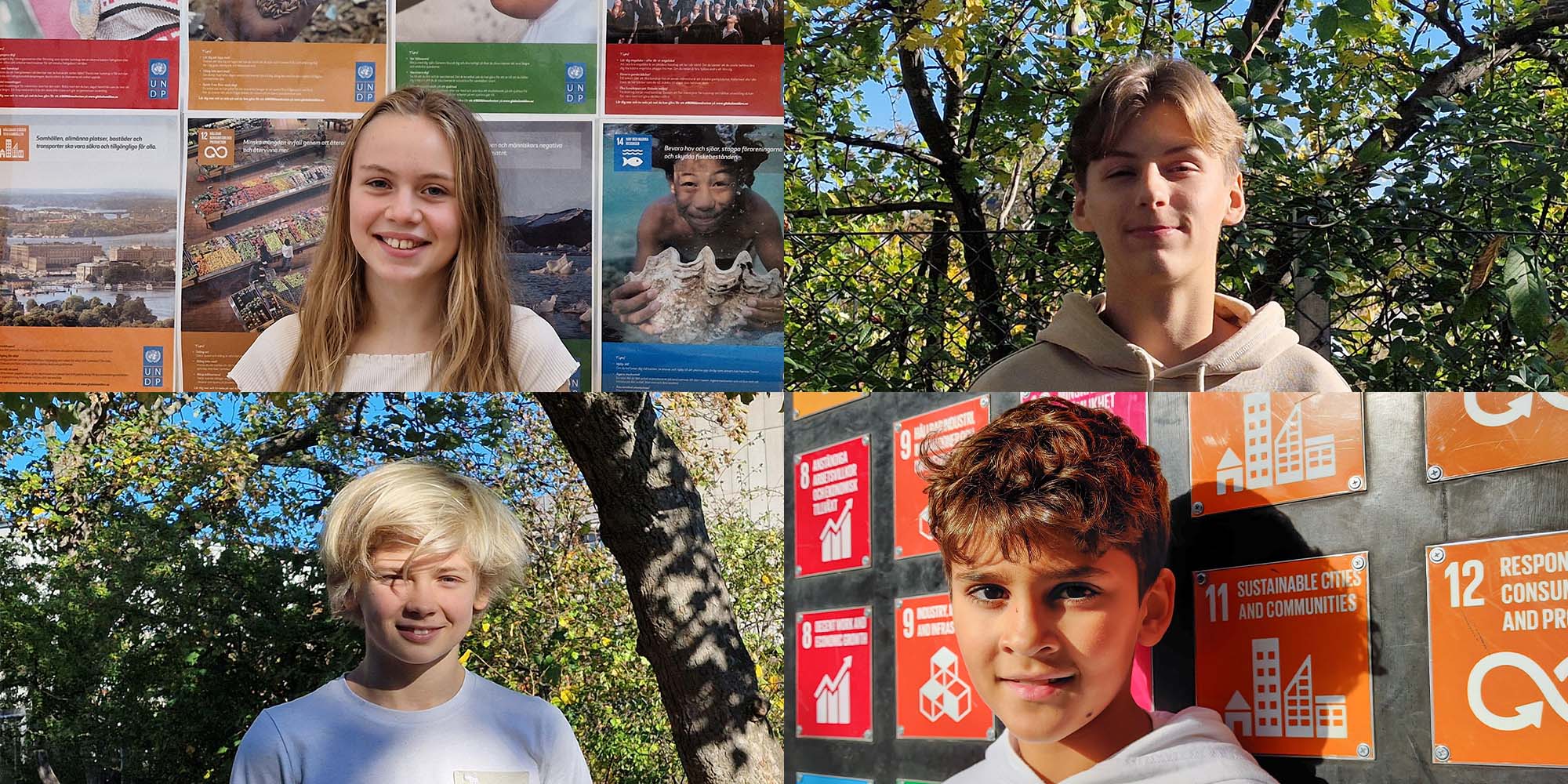
Siri is in grade 5 at Vittra Forsgläntan, Elis and Sven is in grade 8 at Vittra Landborgen and Adam is in grade 3 atVittra Rösjötorp.
Why are the UN's Global Goals important?
- They are important because if we do not reach the goals soon, there will continue to be hunger, poverty and environmental destruction. If we achieved some of these goals, many people would have a better life and we would have a better planet, says Siri.
- It is important to work with the UN goals to help the world, so that it becomes better. For example, you can pick up litter, not waste food and have respect for everyone, says Adam.
- They show how much can be improved in the world, they give hope and inspiration to contribute to improvement, says Sven.
- The goals are important to know what to strive for. If you know what you want to achieve, it becomes easier to make a plan. The goals strive to make the world a better place, which we all benefit from, says Elis.
Tell us about something you have done at school that is related to the global goals.
- For example, we work with "Den stora plastutmaningen". We are working with goal number 13 "Climate action" and we have picked up litter. I thought that work was good. We help nature, says Adam.
- We have watched short films about each goal, we have talked and discussed them a lot and we have received tips on what we can do ourselves to influence and work for some of the goals. I feel I have a good grasp of the global goals, says Siri.
- Since we were young, we have talked about the global goals at school. As we have grown older, we have worked more developed with the goals. Right now we are working on a UN debate where we, the students, represent different opinions in the world and we debate and write based on the UN's global goals and it's conventions, Sven and Elis say.
Is there one of the global goals that you think is particularly important?
- I think goals 1, 2, 14 and 15 are important. Number 1 because we all need a family to take care of. Goal 2, "Zero hunger", because without food you can die. Number 14, the oceans give us water and we should not litter it. And goal 15 is about thinking about nature and we get our air from nature, says Adam.
- Goal number 13, to combat climate change. Without a healthy earth to live on, we do not exist and climate change is the basis of many of our problems and conflicts, says Sven.
- Goal number 4, quality education for all. A good education is the way out of poverty. With a good education, you can help your family and also get out of poverty yourself. A good education makes us and society develop, says Elis.
- I can't choose just one goal, all are equally important. They are all needed for us to have a good society, Siri thinks.
Do you have any tips on what we can do to make the world a better place?
- Think before you travel somewhere or buy something new. And learn about the global goals and what they mean, says Siri.
- You can try not to waste food, not litter and think about the environment. You don't need to drive a car, for example, because there are a lot of exhaust gases, says Adam.
- Not to be too judgmental towards your fellow human beings, you don't always know what they are going through. Not to be too hard on yourself, you have to feel good yourself to make others feel good, says Elis.
- Not to make the same mistakes over and over again, but to learn from your mistakes and also find new solutions, says Sven.
"The students are our future and it is their future we are building"
Alexandra Runemalm works as a team leader for the juniors at Vittra Forsgläntan and Julia Andersson is a teacher and mentor for class 3B at Vittra Rösjötorp International. They are going to tell us more about how the students get to work with the global goals, both in teaching but also during other time at school, and why it is so important.
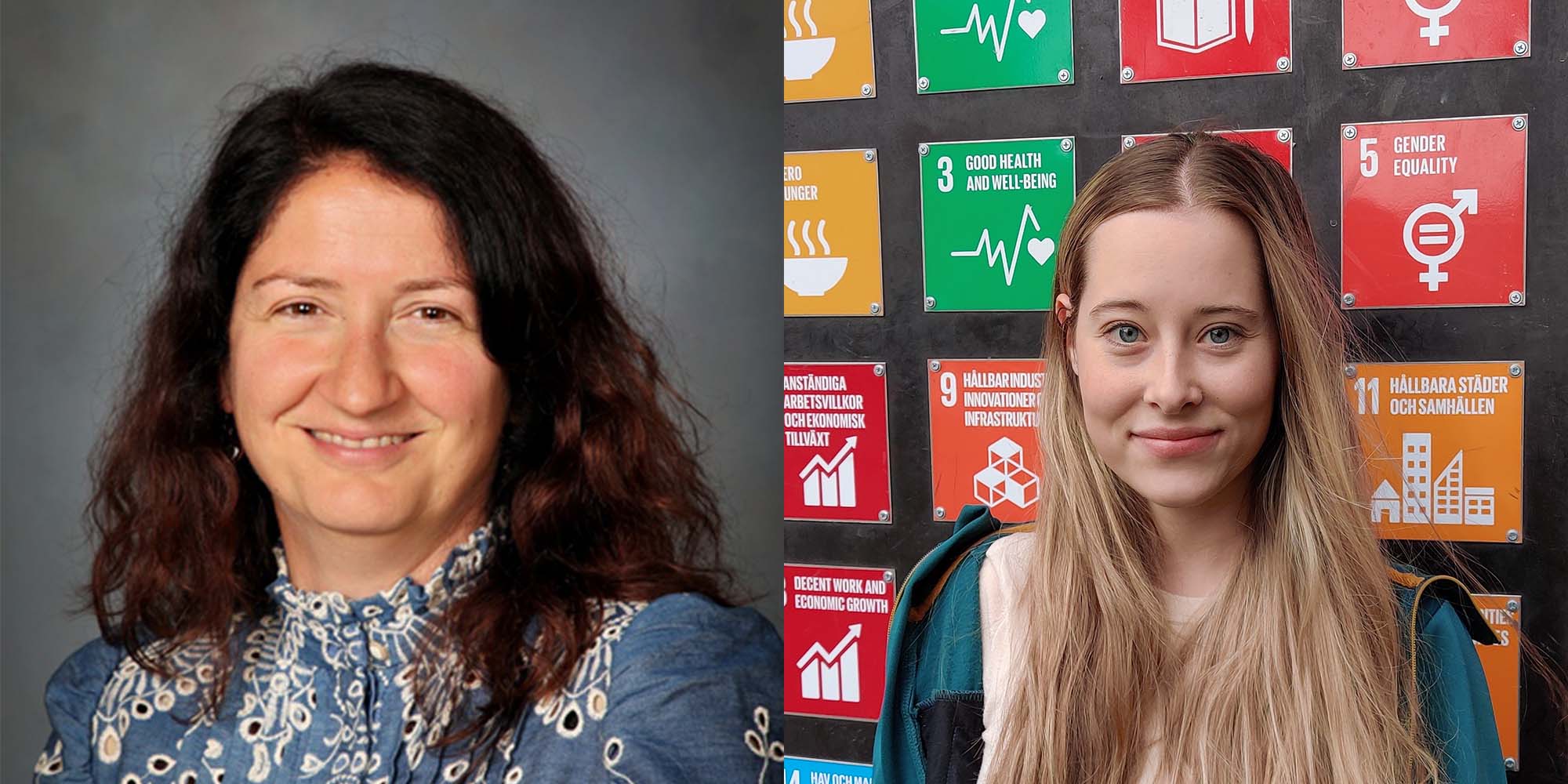
Alexandra Runemalm from Vittra Forsgläntan and Julia Andersson from Vittra Rösjötorp.
Why is it so important to work with the UN's global goals in school?
- At school, we must work with sustainable development in all subjects, and working with the UN's global goals is an obvious part of this. It gives visions and hope about what the future will look like and we need to show that so that our students don't feel climate anxiety and that there is nothing they can do to influence, says Alexandra.
- The students are our future and it is their future we are building. They must be prepared and aware of what is going on in the world so that they can also be involved and have an impact. We live in an international society where global collaboration is becoming more and more important, so it is important to include it from the start - that is, from school, says Julia.
How do you incorporate the global goals into teaching in the classroom?
- We have selected one global goal every week that we have focused on. We learn more about the goal itself during our gathering time and work on it during the subject sessions where possible. It is important that students meet the goals in different ways in different subjects, says Alexandra.
- We usually work on a theme-based and interdisciplinary basis. We have recurring theme days and projects for the whole school that are associated with specific UN goals. We also work in smaller projects that connect to the students' own everyday life. In grade 3, for example, we are currently working with "Den stora plastutmaningen" from UR to make the students more aware of their own plastic consumption and about the impact of plastic on the environment, says Julia.
How do you work with the global goals in teaching that do not take place in the classroom?
- We have Culture Days at our school where we meet in mixed age groups and work around a theme, for example The Vittra skills or the global goals, says Alexandra.
- The global goals are represented throughout our school activities. In our after-school centre, for example, we have something we call "Movement", which is linked to goal number 3 - "Good health and well-being". At the school, we also have a strong student council that takes up the students' voices on what they think is important. During the last class council that we had in grade 3, they thought that the school should organize a food waste competition. In this way, we can shed light on both the issue of hunger but also sustainable consumption, says Julia.
What do students get out of learning about this?
- They are equipped with tools to be able to create a future that not only benefits themselves but also other people. They also have knowledge that allows them to make informed choices when it comes to sustainable development and our climate, says Alexandra.
- The students gain much-needed knowledge for life by learning about the global goals. They get insights into how the world works and what is happening around the world, while at the same time they get tools to make their voices heard and be able to influence. The students don't only get theoretical knowledge, but also practical knowledge that makes them capable of action and ready for tomorrow's challenges, says Julia.